
Brand development
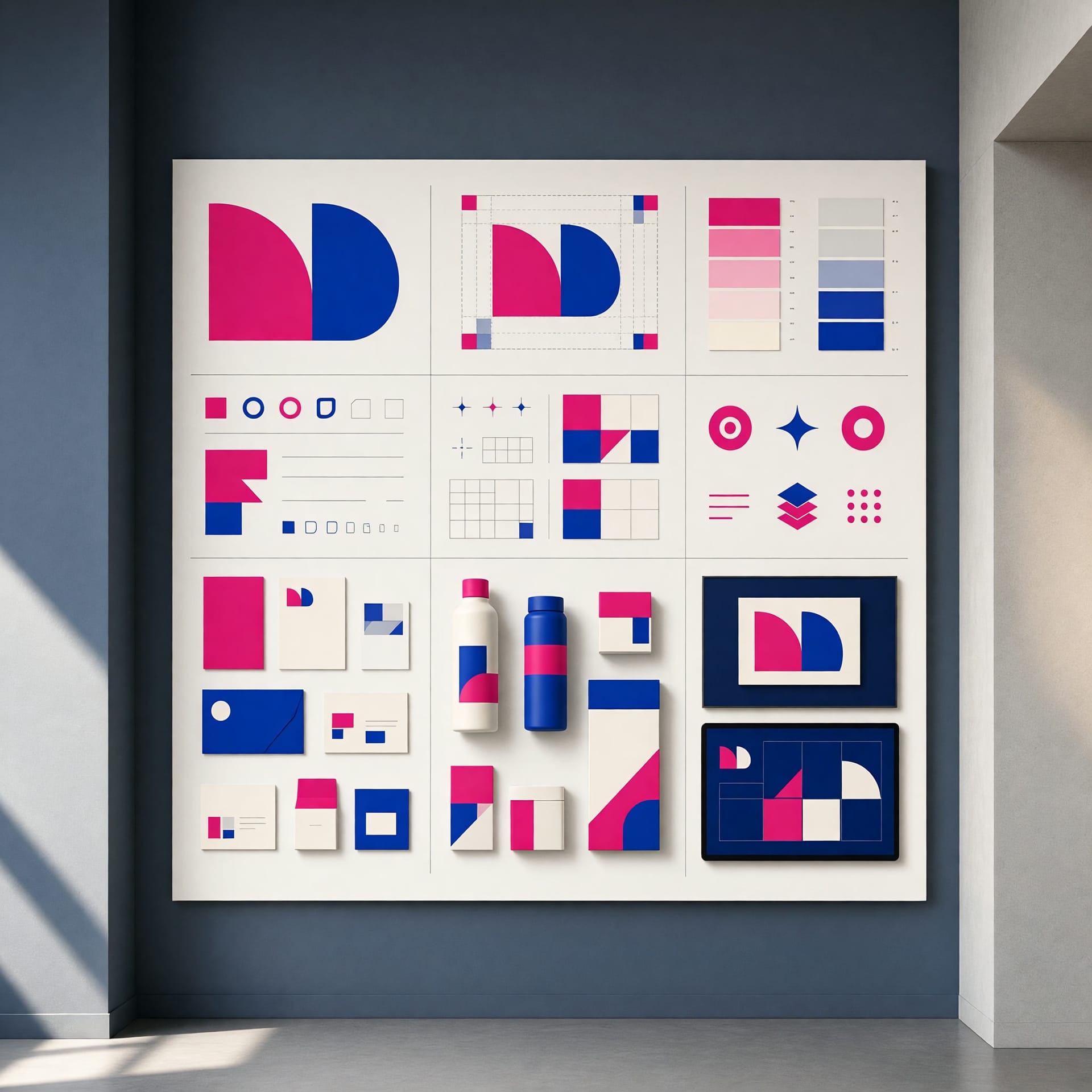
Most companies do not have a logo problem. They have four logos, three greys that are all called "the grey", a deck template nobody uses and a sign at reception that predates the current name. A brand system is the thing that settles all of it at once, and then answers the next question without another meeting.
What is in it
Six parts, and you get all six. There is no version of this where the guidance arrives as a second project once the budget has recovered.

Strategy
What is actually true about you, what your category has already claimed, and the space nobody is standing in.

Naming
A name, or a defence of the one you have. Inside the nine weeks, not a separate engagement.

Verbal identity
How you sound in a sentence, a subject line and a complaint. With examples, not adjectives.

Visual identity
Mark, type, colour, layout and imagery — drawn as a system rather than as a set of files.

Guidance
Short enough to be read and specific enough to be followed. Organised by question, not by discipline.

Ownership
Every working file, every licence, every source. Yours on the last day, with nothing held back.
Executed in nine weeks
| Weeks | Phase | What happens | What you have at the end |
|---|---|---|---|
| 1–2 | Ground | Interviews, category audit, and everything you already have | A written account of what is true, and what is not |
| 3 | Line | Positioning locked, on one page, in one session | One page you can hand to a board |
| 4–6 | Build | Naming, verbal identity, mark, type, colour, layout | The system, drawn and named |
| 7–8 | Load | Applied to the things you actually make — site, signage, decks, correspondence | Proof it survives contact |
| 9 | Handover | Files, guidance and a working session with your team | Everything, owned by you |
A brand system is not a logo with rules attached. It is the answer to every question your team is going to ask on a Tuesday.
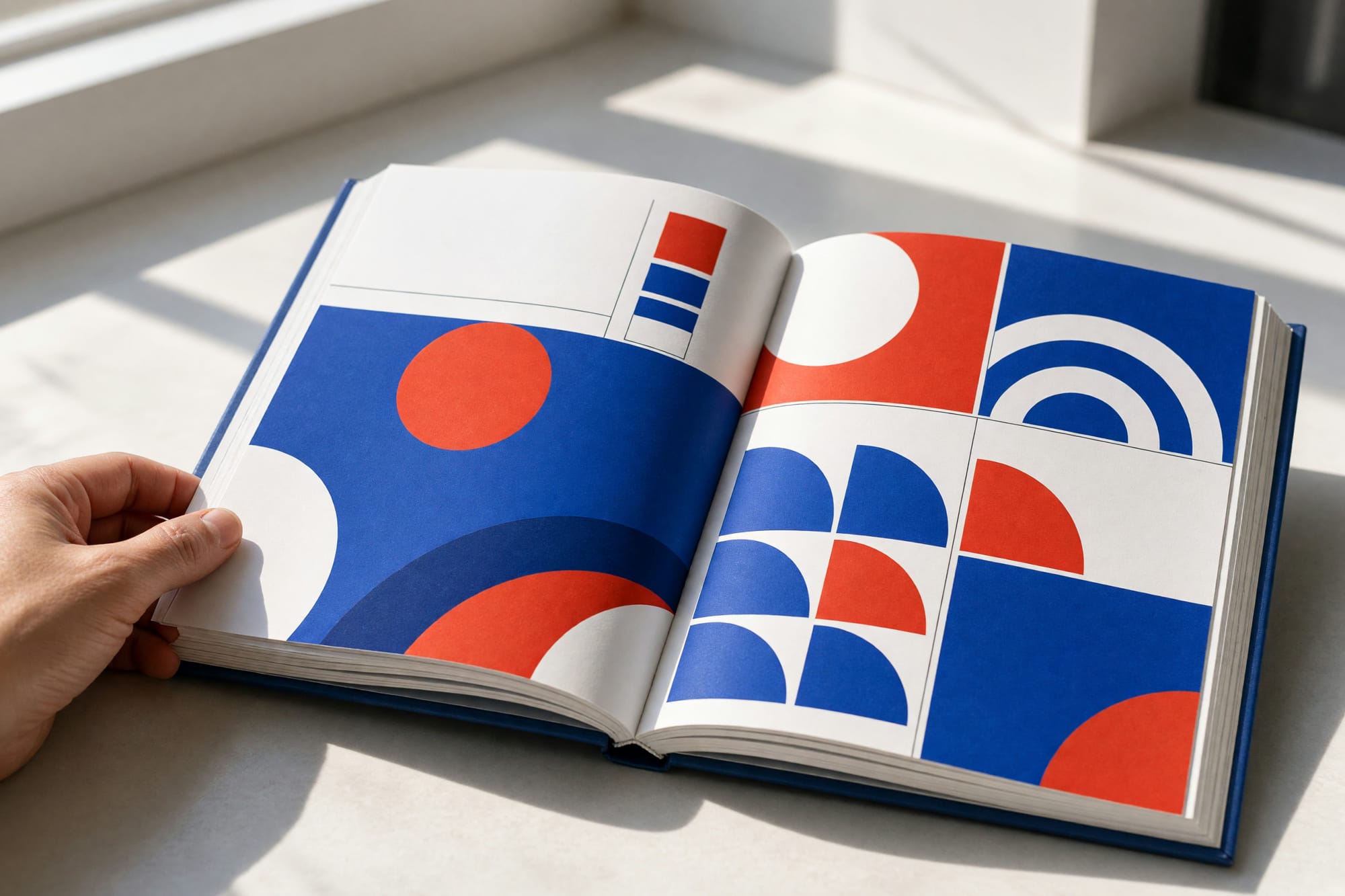
Guidance short enough to read
Most guidelines document what was decided, which is an archive. Ours answer the questions that actually arrive on a Tuesday — what happens when the mark sits on a photograph, which grey is for text, what to do on a form. Organised by question, not by discipline.
We wrote about why yours went unreadTell us what you are trying to fix.
No pitch, no strings attached. The price is on the pricing page, so the first call can be about the work.
Let's talk